Follow the path of the cake (with time for biscuits) – Vanilla Cassette and Camera Biscuits

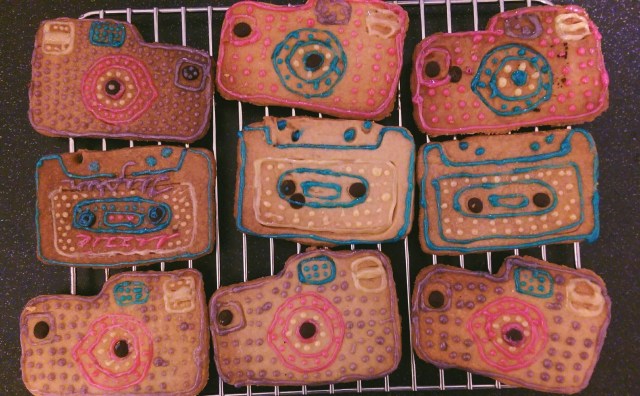
Arguably the difference between the cake and the biscuit were served to the general public due to the publicity surrounding the high profile trial between McVities and HM Revenue and Customs over whether the humble Jaffa Cake deserved its tax-free status: under EU legislation chocolate-covered biscuits are taxed while cakes are exempt from VAT. McVities made a 30cm Jaffa Cake to illustrate the fact that it hardens as it becomes stale (like all cakes!) as opposed to absorbing moisture and losing its snap like a biscuit. Given that this blog was supposedly dedicated to my sweat-toothed passion for the cake I seem to have forgotten this distinction because I have branched out into its taxable cousin! I’m a firm believer in what the poet William Cowper expressed so adeptly with his expression ‘Variety is the spicy of life’. So I’m waging war on the monotony and boredom! You may wonder what has inspired such a noble and high minded pursuit – turns out that getting a set of biscuit cutters as a present and realizing that many biscuits are super quick and easy to make can play a big factor! The biscuits that I decided to use to mix up my baking routine were vanilla cassettes and camera biscuits.

So to the useful stuff – the recipe!

 (Serves 12)

  • 250g unsalted butter
  • 125g caster sugar
  • 1 teaspoon vanilla extract
  • 300g plain flour
  • Icing pens
  • Dark chocolate chips
  • Pinch of salt
  • 1 egg yolk

To complete the first step down my biscuit journey I added the butter, caster sugar and the vanilla extract to a mixing bowl. I used a wooden spoon to get in some caker-exercise while beating the mixture into a smooth and fluffy texture. I then added the egg yolk before doing another set of cake-ercise to beat the egg into the mixture. Finally I added the plain flour and integrated it into the mixture using my fingertips. I pressed the dough into a ball before dividing it in half and wrapping it in cling film. I popped the dough ball in the fridge for about an hour – this is vital to ensure that your biscuits form nice shapes when you employ the biscuit cutters.

I took out one half of the dough from the fridge and rolled it out on to a flour sprinkled work surface so that it had the approximate thickness of a pound coin. I had lent my rolling pin to a friend so I improvised by using a heavily floured long cylinder shaped glass.

IMAG1681_1
Improvised Rolling Pin

I dipped the biscuit cutters into the plain flour before cutting into the dough and putting the separated shapes on to a greased baking tray. I repeated this process until I had used all the dough and added a final flourish to the cassettes and cameras using a few dark chocolate chips.

I added the baking trays into a preheated oven at 180°C for ~10 minutes until they had a light golden hue. When the biscuits were cooled I added my improvised cassette and camera edible decorations using the icing pens.

And that is how the cassette and camera biscuit crumbles …
IMAG1695_1_1

Sacher inspired Torte

Incorporating cake into your diet requires allowing yourself wiggle room for naughtiness in your schedule while planning for the inevitable lack of wiggle room in your trousers if you indulge a little too frequently without enough activity. I’ve definitely been embracing the former without enough of the latter recently and I need to tell you why! Chocolate cake! And I’m not talking about any of your mousse or gateau nonsense. I’m corresponding in rich dense sponge paired with tarty jam and a dark chocolate icing so shiny you could do your hair with it – The Sachertorte. This cake is a Viennese specialty and is celebrated every year in Austria on the 5th of December during National Sachertorte Day, which is doubly impressive considering it was invented by a sixteen year-old apprentice called Franz Sacher for Prince Metternich in 1832. This final fact belies the sophistication of the recipe for this dark, dignified and brooding cake that is unmistakably proof of a cake God. Franz Sacher managed to build a career this classic European chocolate sugar high and his original recipe is a secret (to try it you must visit the Sacher Hotel in Vienna) so in the following I present a “runnning4cake torte”.

 As the Sachertorte sponge uses egg whites to create volume as opposed to raising agents like baking powder it means that it has a denser sponge that can appear dry (though I didn’t find this). Rather than tinkering and tweaking the recipe to compensate for an ailing dry sponge tradition dictates that the cake should be served with complementary whipped cream to moisten each spongy mouthful. As this is a classic cake I’ve adhered to this tradition except that I decided to use clotted cream because I can.

(Serves 12)

  • 345g dark chocolate (chopped)
  • 300g granulated sugar
  • 125g icing sugar
  • 125g unsalted butter
  • 6 large eggs, separated
  • 1 tsp of vanilla extract
  • 125g plain flour
  • Pinch of salt
  • Apricot jam
  • Clotted Cream
  • 120ml of water
  • 1/2 tsp of vegetable oil

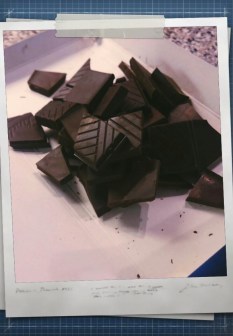
Firstly I melted 180g of my dark chocolate – I used Lindt 70% cocoa chocolate, as it happened to be on offer at the supermarket.

IMG-20160412-WA0001_1_1
Chopped chocolate

Never missing an opportunity for some exercise I beat (by hand!) the butter in a mixing bowl until it was light and creamy before gradually adding the icing sugar and beating again until it returned to its light and creamy texture. Then I beat in the egg yolks one at a time before adding the cooled chocolate and vanilla and (yep you guessed it) beating it further.

In a separate mixing bowl I whisked (by hand!) the egg whites with a tablespoon of granulated sugar until is appeared foamy before gradually adding 100g of the granulated sugar. The mixture will transform from its foamy fluid phase to a thicker opaque state. The real art to this stage is knowing when to stop. If fatigue doesn’t stop you earlier you want to stop whisking when you can form firm peaks in the mixture – peaks that hold form except that the tips can fold back on themselves.

Then I folded the egg whites into the chocolate mixture to minimise compromising the hard whisking efforts of the previous step before folding in a sifted mixture of the plain flour and salt. I added this batter to a 9-inch high-sided baking tin and placed it into a pre-heated oven (190°C) for 35 minutes (or until a kebab skewer inserted into the middle comes out clean).

IMG-20160412-WA0005_1
Cooling sponge

Then I allowed the cake to cool on a rack before slicing it into two even layers. Spread a generous helping of apricot jam onto the bottom layer before returning the second layer onto the top of the cake and adding a little more jam to the outside of the sponge.

Now for the difficult bit! The chocolate glaze! Ideally you want your glaze to be immaculately smooth and shiny for maximum visual impact. I added 200g of granulated sugar to 120ml of water in a saucepan. The shiny aesthetic is very sensitive to the temperature of this mixture. I don’t have a sugar thermometer so I used the ‘sugar test’ – to do this I heated the mixture on medium heat while stirring until it is was boiling.

Then I extracted a little of the sugar solution and dropped it into a bowl of cold water. If the sugar is at the correct temperature you will be able to pick up the sugar in the water and form it into a squishy ball. If the temperature is too low the sugar will form threads in the water. Once I had the soft ball regime I removed the saucepan from the heat and whisked in 115g of dark chocolate. I immediately (this is key!) poured the hot mixture over the top of the cake – I tried to be strategic with my pouring because I wanted to eliminate the need to use a knife to spread the glaze, which could have broken the beautiful uniformity of the glaze.

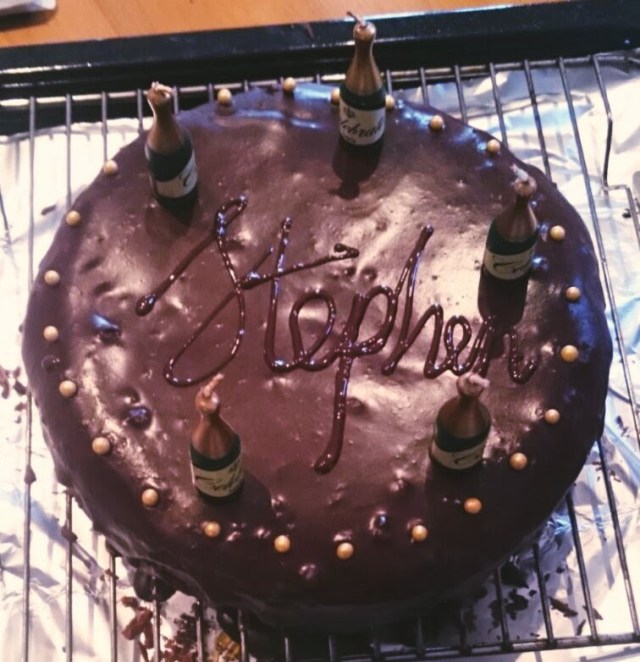
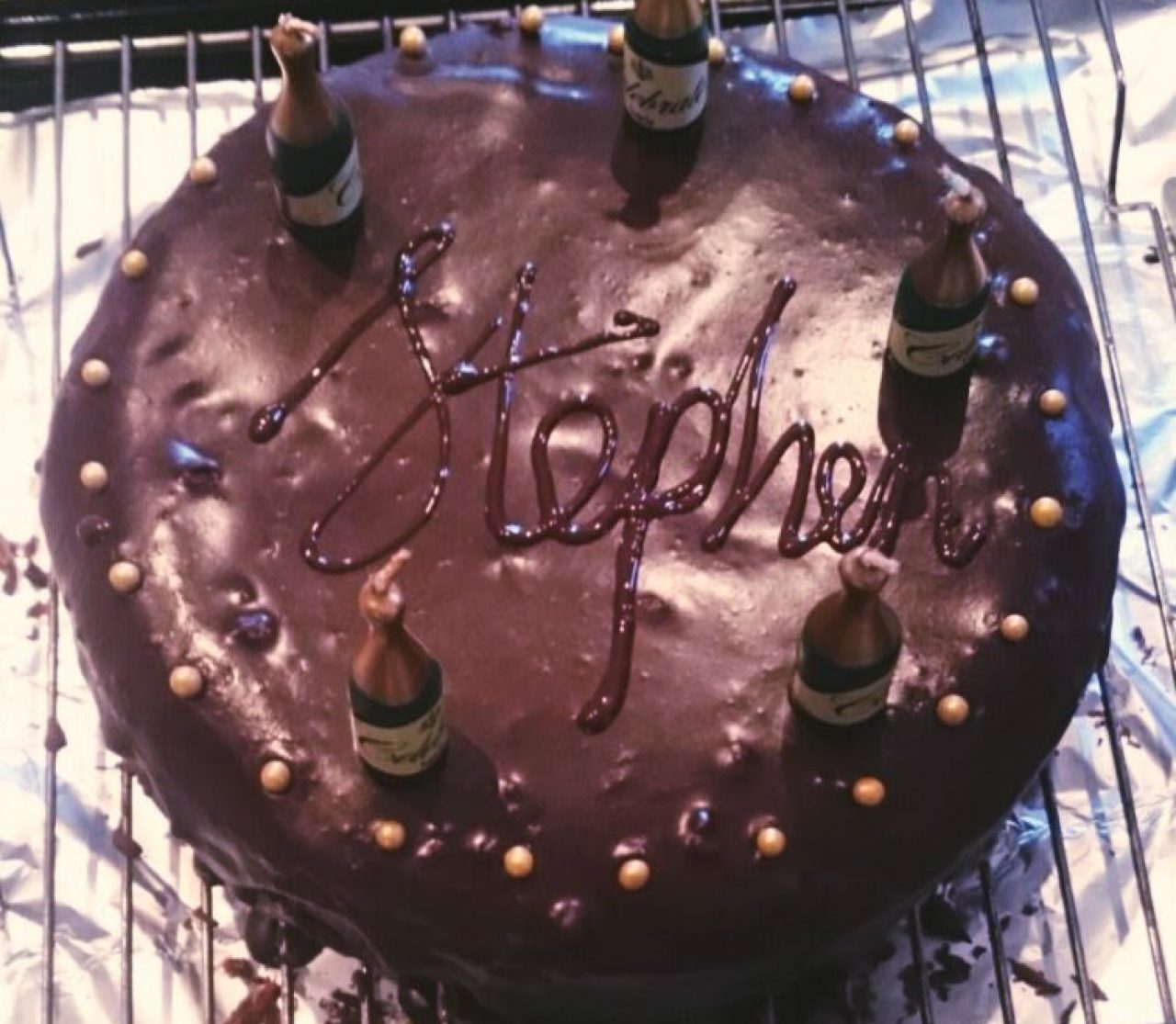
No sachertorte would be complete without a final chocolate writing flourish. For this step I simply melted 50g of chocolate and mixed in ~1/2 a tsp of vegetable oil. I added this to a plastic sandwich bag and snipped off the corner to make a small hole before piping directly onto the top of the cake.

IMG-20160412-WA0003_1
Running for cake torte!

I allowed the cake to set for about an hour before brewing up a fresh batch of coffee, adding a dollop of clotted cream to my plate and a generous slice of this magnificent cake.

Yummy Plummy -Plum Clafoutis

It was the weekend. I had a punnet of ripe plums and the time restriction of a social engagement in the evening, but I was craving something sweet and delicious. This culinary conundrum echoes that posed to budding chefs on the Ready, Steady Cook television show in which two members of the public hand over a bag of unknown ingredients bought on a budget to the chefs. The chefs must create a meal from the ingredients presented before them within the time limit of the program. For my situation I imagine that you, the reader, are my equivalent to Ainsley Harriott. I am explaining to you my solution, my whimsical bake that can satisfy my ingredients (including a generously stocked kitchen of basic ingredients). Well Ainsley….reader….today I will bake a plum clafoutis!

For those of you unfamiliar with this – it is a French dessert of fruit (traditionally black cherries) baked in a flan like batter with a sprinkling of powdered sugar where ‘flan like batter’ euphemistically means a light, wobbly and lovely custard.

My highly edible plum clafoutis ingredients list

(Serves 4)

  • ~400g fresh plums (1 punnet of plums without pips!)
  • 75g caster sugar
  • 3 tbsp of Crème de cassis
  • 20g butter, melted, plus extra to grease
  • 2 tbsp cinnamon demerara sugar
  • 60g plain flour
  • Pinch of salt
  • 3 small eggs, beaten
  • 270ml whole milk

I de-stoned the plums after washing and cut them into segments about the size of a tangerine segment and added 2 tbsp of caster sugar and the crème de cassis. I tossed them together and left them to macerate for the time it took me to measure out the other ingredients and for the oven to heat up (I used 175°C with a fan oven).

Plum segments lining the baking dish

I greased a baking dish that could contain all the plums in a single layer, added a tbsp of the cinnamon demerara sugar to the baking disk and then spun the dish so that the base of the dish and the sides of the baking dish were coated.

I sifted in the flour to a separate mixing bowl, added a pinch of salt and the remaining caster sugar (and a couple more to make sure I satisfied my sweet tooth) before adding in eggs and melted butter. The resulting batter was light and smooth.

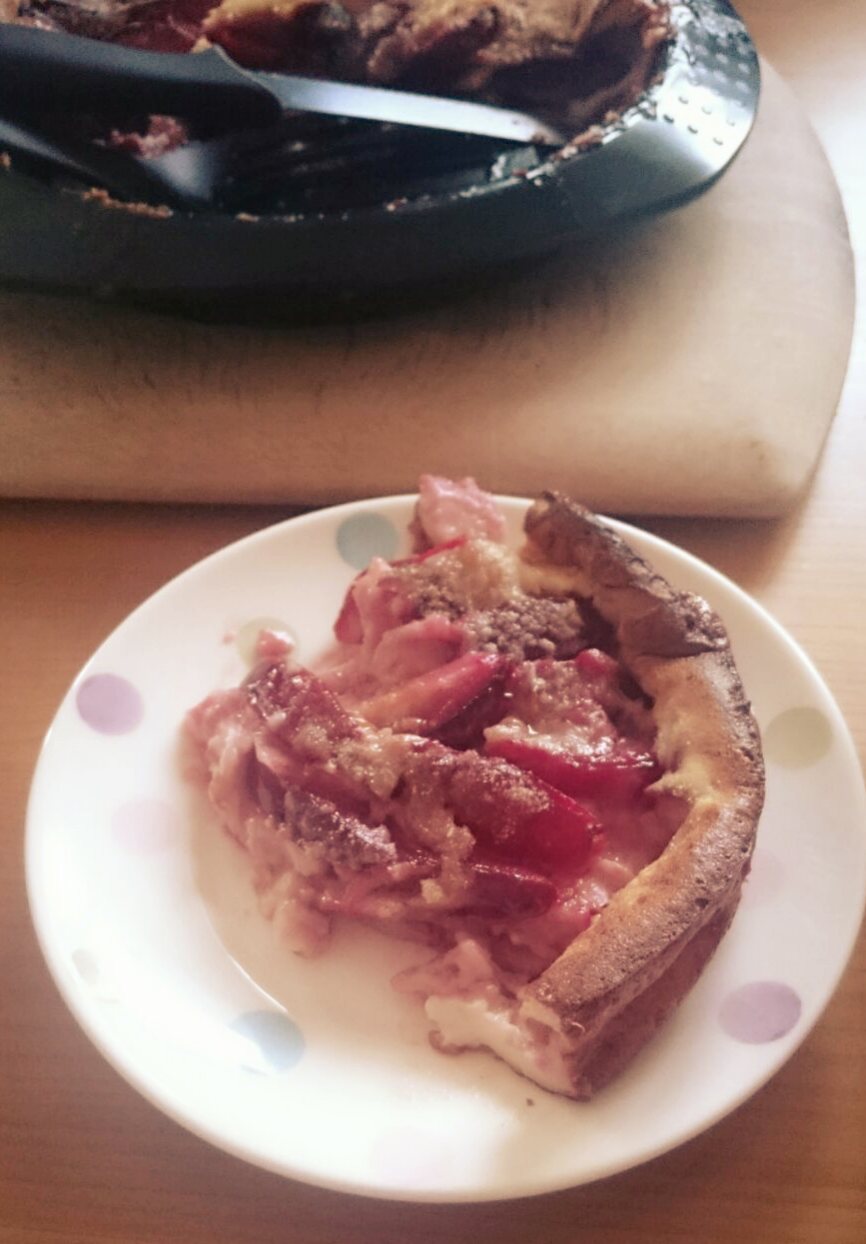
I poured this mixture into the baking dish that had been lined with the plum segments and popped it in the oven for about 30 minutes. I took the clafoutis out when the centre looked like it was browning slightly, but retained a slight wobble. Upon taking the bake out it had risen magnificently like a soufflé, but this quickly drops back down as you let the bake cool (this treat should be served warm and not hot). For the final flourish I liberally sprinkled with the remaining cinnamon demerara sugar and brewed a fresh batch of coffee to compliment it. I’d recommend having both with cold cream!

Plum Clafoutis fresh from the oven

This is a quick and relatively simple bake that is a perfect reward to indulge in after a jog. As it also has relatively high egg content and contains fruit it can perhaps be considered slightly more nutritious treat for an athlete than many other French delights….or at least that’s what I told myself!

I hope your taste buds review this bake as highly as my own did.

Times up! Phew! How did I do Ainsley?